
In This Blog
What Is Eczema?
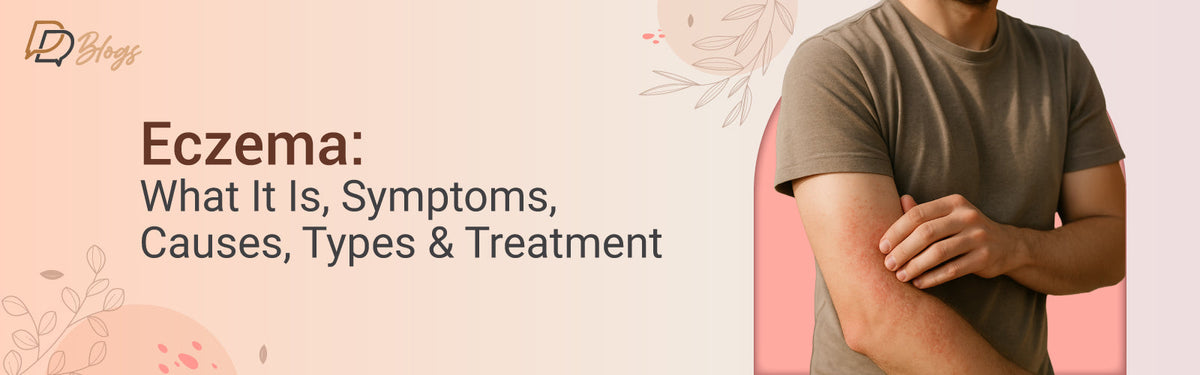
Eczema, or atopic dermatitis, is a chronic inflammatory skin condition that affects people of all ages. It causes dryness, redness, irritation, and intense itching, and while it’s not contagious, it can severely affect your quality of life.
Eczema compromises your skin’s protective barrier, making it more vulnerable to irritants, allergens, and moisture loss. It often begins in childhood but can appear at any stage of life.

Good to know: Eczema is part of the atopic triad, alongside asthma and hay fever, pointing to a shared immune and allergic link.
Common Symptoms of Eczema
Eczema symptoms vary by individual and severity, but common signs include:
- Persistent itching (often worse at night)
- Red, inflamed patches
- Dry or scaly skin
- Thickened or cracked areas
- Blisters or oozing during flare-ups
- Raw, sensitive skin from scratching
In babies, it often appears on the cheeks and scalp. In adults, it may affect the neck, elbows, wrists, or knees.

Good to know: Eczema tends to be cyclical, flare-ups may come and go depending on triggers.
What Causes Eczema?
There’s no single cause, eczema is the result of genetics, immune dysfunction, and environmental triggers. Common contributing factors include:
- A mutation in the filaggrin gene, which weakens the skin barrier
- Family history of eczema, asthma, or allergies
- Exposure to irritants: soaps, detergents, cigarette smoke
- Allergens: pollen, pet dander, dust mites
- Climate extremes: dry winters or humid summers
- Hormonal fluctuations (e.g., pregnancy, menstruation)
- Emotional stress

Good to know: People with eczema often have an overreactive immune response, which triggers inflammation even from mild irritants.
Types of Eczema
Different eczema types may require slightly different care. Here’s a quick guide:
| Type | What It Looks Like | Triggers |
|---|---|---|
| Atopic Dermatitis | Most common form; dry, itchy rashes | Genetic + immune-related |
| Contact Dermatitis | Red, itchy skin where irritant touched | Soaps, metals, fragrances |
| Dyshidrotic Eczema | Small, itchy blisters on hands/feet | Moisture imbalance, stress |
| Nummular Eczema | Coin-shaped red or brown patches | Dry skin, insect bites |
| Seborrheic Dermatitis | Flaky, oily areas (scalp, eyebrows) | Yeast imbalance |
| Stasis Dermatitis | Redness on lower legs | Poor circulation, varicose veins |
Good to know: You can have more than one type of eczema at once.
Eczema Treatments: What Really Works?
While there’s no permanent cure, eczema is highly manageable with the right care. Here’s how:
1. Moisturizers (Barrier Repair)
- Use thick creams or ointments several times daily
- Apply immediately after bathing to lock in moisture
- Avoid fragranced products
2. Topical Medications
- Corticosteroids (short-term) to reduce inflammation
- Calcineurin inhibitors (e.g., tacrolimus) for sensitive areas or long-term use
3. Other Therapies
- Antihistamines to ease nighttime itch
- Antibiotics if the skin is infected
- Phototherapy (light therapy) for stubborn cases
- Biologics (like dupilumab) for moderate-to-severe eczema
Good to know: Always patch test new products, even medicated ones.

Lifestyle Tips for Flare-Up Prevention
Daily habits make a huge difference:
- Use a humidifier in dry weather
- Wear breathable, cotton fabrics
- Shower with lukewarm, not hot, water
- Manage stress with breathing exercises, yoga, or journaling
- Identify and avoid known triggers (keep a symptom journal)
Final Thoughts: Understanding Eczema Empowers You
Eczema may be chronic, but it doesn’t have to control your life. By understanding its root causes and your personal triggers, and by using moisturizers, medications, and lifestyle changes, you can dramatically reduce flare-ups and reclaim comfort in your skin.